
You have a solid business idea, a plan, and the drive to make it happen. Now comes the hard part: convincing investors to believe in it as much as you do. A great business investment proposal can open doors that would otherwise stay shut.
In this guide, we walk you through everything you need to know: what an investment proposal is, what it should include, how to write one step by step, and how to present it in a way that actually sticks in the memory and gets funded.
What Is an Investment Proposal?
An investment proposal is a formal document that presents your business idea, plan, or project to potential investors. It outlines the opportunity, financials, expected return, and team behind it, so investors can evaluate whether the project is worth funding.
📝 At its core, an investment proposal should build confidence: that the opportunity is real, the numbers are realistic, the risks have been considered, and the team has a clear plan to deliver.
That’s why a strong first impression matters so much. A structured proposal with clear visuals and relevant supporting materials helps investors understand your business case faster and take it more seriously from the first page.
Present your investment proposal as a flipbook
Key Elements of a Strong Investment Proposal
Problem
Start by defining the problem or opportunity your business addresses: who experiences it, why it matters, and why now is the right time to solve it.
💡 Pro tip: Be specific. "Small businesses struggle with cash flow" is vague. While "63% of small businesses cite late invoice payments as their major operational challenge, costing the average business $30,000 a year in lost productivity" is a problem worth solving.
Investors hear hundreds of pitches, and the ones that stick are the ones that make the market need feel real and urgent.
Solution
Once you've established the problem, explain how your solution addresses it clearly and concisely:
- What does your product or service do?
- How does it solve the problem better than what already exists?
- What proof do you already have that it works?
- How will customers use it in real life?
This section should answer one important question: why is your approach worth funding? Focus on the practical value of your solution, not just its features.
Market opportunity
Investors need to know the size of the prize. Include your target market, customer segments, market size, relevant trends, and competitive landscape. Your market analysis should cover:
- Total Addressable Market (TAM): The full market demand for your product or service.
- Serviceable Addressable Market (SAM): The portion of the market you can realistically reach.
- Serviceable Obtainable Market (SOM): The share you expect to capture in the near term.
💡 Pro tip: Back your numbers with credible sources. Show investors the scale of the opportunity. For example, instead of saying “the market is growing fast,” write: “The global market is projected to grow from $X in 2025 to $Y by 2030, according to company/source.”
Business model
How do you make money? This section should explain your revenue model clearly—whether that's subscriptions, one-time sales, licensing, commissions, or a combination. Include your pricing strategy and explain why it works for your target customer.
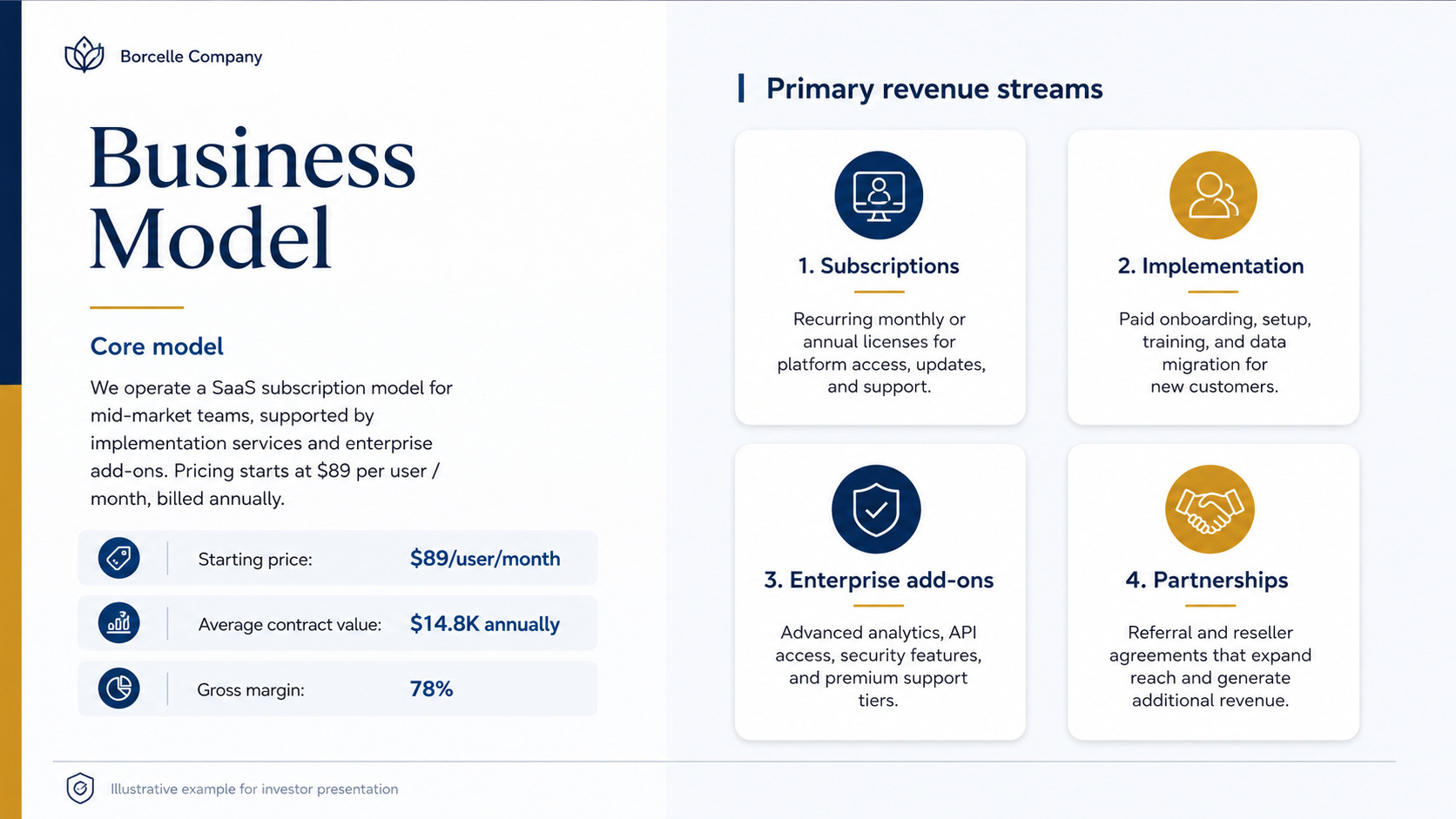
Revenue business model example
Financials
Many proposals fall short here. Show the assumptions behind your numbers—customer acquisition cost, conversion rate, average deal size.
💡 Pro tip: For example, if you're a startup projecting $2M in revenue by year two, walk investors through the logic: you're acquiring 50 new customers per month at a $200 customer acquisition cost, with an average contract value of $3,000. Suddenly, the projection is a story backed by numbers investors can stress-test and believe in.
Investors may look for data such as:
- Revenue projections for the next 3–5 years.
- Current financial position—revenue, burn rate, runway.
- How much funding you need and how the investment will be used.
- Expected return on investment.
Be realistic. Overly optimistic projections are a red flag, not a selling point. Investors have seen enough pitches to spot wishful thinking immediately.
Don’t just explain what you're building—show how you're going to build it. Break your plan into clear phases, for example:
- What happens in the first 90 days after funding.
- What milestones you expect to hit in year one.
- What success looks like at the end of year two.
The more specific your timeline, the more credible your proposal becomes.
Team
Investors are backing people as much as ideas. Introduce your core team, highlight relevant experience and professional expertise, and explain why this group is uniquely positioned to execute the plan. If you have advisors or notable backers, also mention them here.
How a Better Presentation Can Help You Win Investor Confidence
Investors often look at several opportunities at once, so your job is to make yours impossible to ignore.
💡 Pro tip: Use a clear structure, concise sections, and visuals to keep your document scannable. Charts, graphs, and infographics communicate financial data and market size far more effectively than paragraphs of text.
A PDF can easily go unnoticed—even when it contains all the right information. It can feel hard to navigate and difficult to track once it leaves your hands.
Showcasing your proposal as an interactive flipbook can change that. Here's how FlippingBook helps you make your point and land the message you want:
✅ A polished first impression
You can brand your proposal with your logo, brand colors, and custom background. This helps set the tone before investors even reach your executive summary. In a competitive field, that first impression really counts.
✅ Easy sharing with one link
Send your flipbook proposal as a simple link. No attachments, no downloads, no "I couldn't open the file" emails. Investors can access it instantly on any device, whether they're at their desk or reviewing it on their phone between meetings.
✅ Visual details that support your story
Numbers and data are much easier to understand when they are visual. In a flipbook, you can add interactive assets: images, links, videos, GIFs, and forms, to support your message and point investors to the details that matter most.
See interactivity in action—flip through a real example
The Christie NHS Trust Annual Review
💡 Ideas for using interactivity:
- Add a short video pitch inside the proposal to walk investors through the case in a couple of minutes. It can give them a feeling of hearing the idea from you directly, even if you are not in the same room.
- Use GIFs to draw attention to key figures, charts, or growth curves, so the most important points do not get lost on the page.
- Add a preview image that opens a gallery when clicked. This lets investors see more product visuals, location photos, or project concepts without making the proposal longer.
- Use links to share extra data, market research, financial models, case studies, or product demos right where they are needed.
With interactive elements, the proposal stays clean and focused, while investors can still go deeper when they want more detail.
✅ Reader insights for better follow-ups
Another advantage of turning your proposal into a flipbook is that you can send each investor a separate trackable link. So instead of wondering whether it was actually read, you get useful insights into investor engagement, like when they opened your proposal, which sections they spent the most time on, and whether they came back for a second look.
💡 Pro tip: If an investor spends time on your financial projections or market analysis, you know which part caught their attention and can prepare for that conversation. If they do not open the document, you can send a shorter reminder or check whether the timing was right.
✅ Always up to date
Found a typo after sending? Need to correct a number or refresh a chart? We’ve all been there. With FlippingBook, you can update the PDF behind the same link, so investors always open the latest version.
Investment Proposal Templates and Examples
Starting from a blank page is one of the hardest parts, so a good investment proposal template can give you a content structure.
Consider your industry. For example, a real estate investment proposal will look different from a startup investment proposal. The former focuses heavily on property financials and projected returns, while the latter leans into market opportunity and team credentials.
See investment proposal example
Transfrom your proposal for free
Want to create a digital proposal but don’t have the design ready yet?
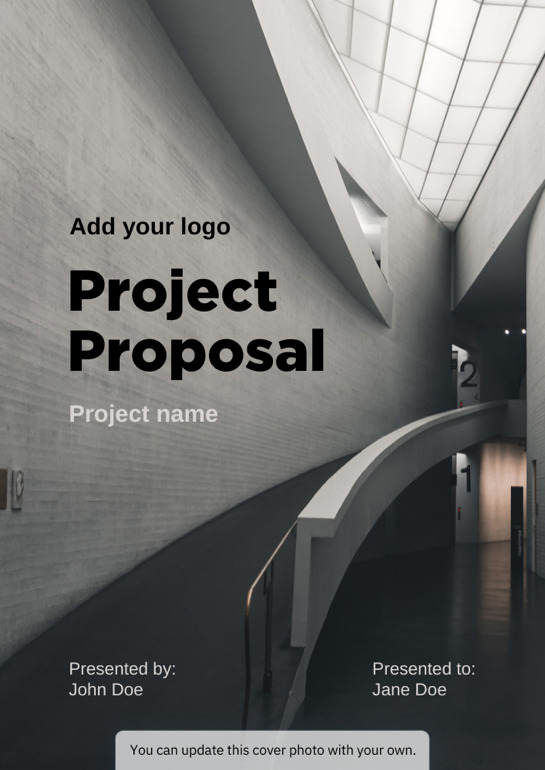
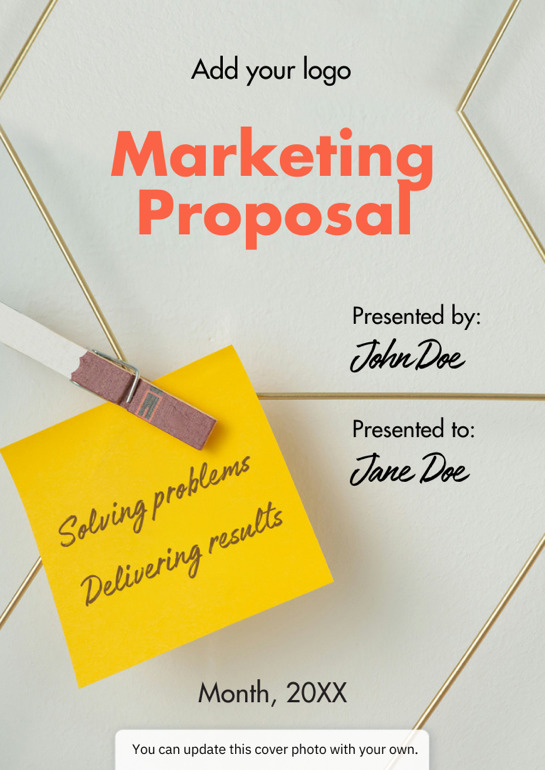
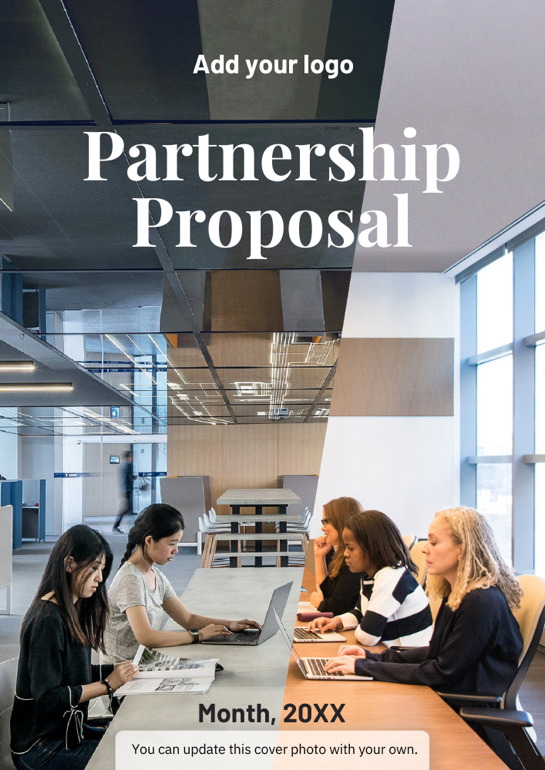
Start with one of our investment proposal samples and customize it in Canva. Thanks to our Canva integration, you can also import it straight into FlippingBook. A few clicks, and your flipbook proposal is ready to share with investors anywhere in the world.
|
|
|
|
|
|

How to Write an Investment Proposal Step by Step
📍 Step 1: Define your audience
Before you start writing, get clear on who will read the proposal. An angel investor looking at an early-stage startup will not have the same priorities as a real estate investment group reviewing a property development.
Think about what matters most to them. Are they looking for fast growth, stable returns, market proof, or strong assets? This will help you decide what to emphasize.
📍 Step 2: Start with an executive summary
The executive summary is usually the first thing investors read, but it is often easier to write it last. Pull out the essentials: the problem, solution, market opportunity, ask, and expected return. Keep it tight. If this section feels vague or overloaded, investors may not make it to the rest of the document.
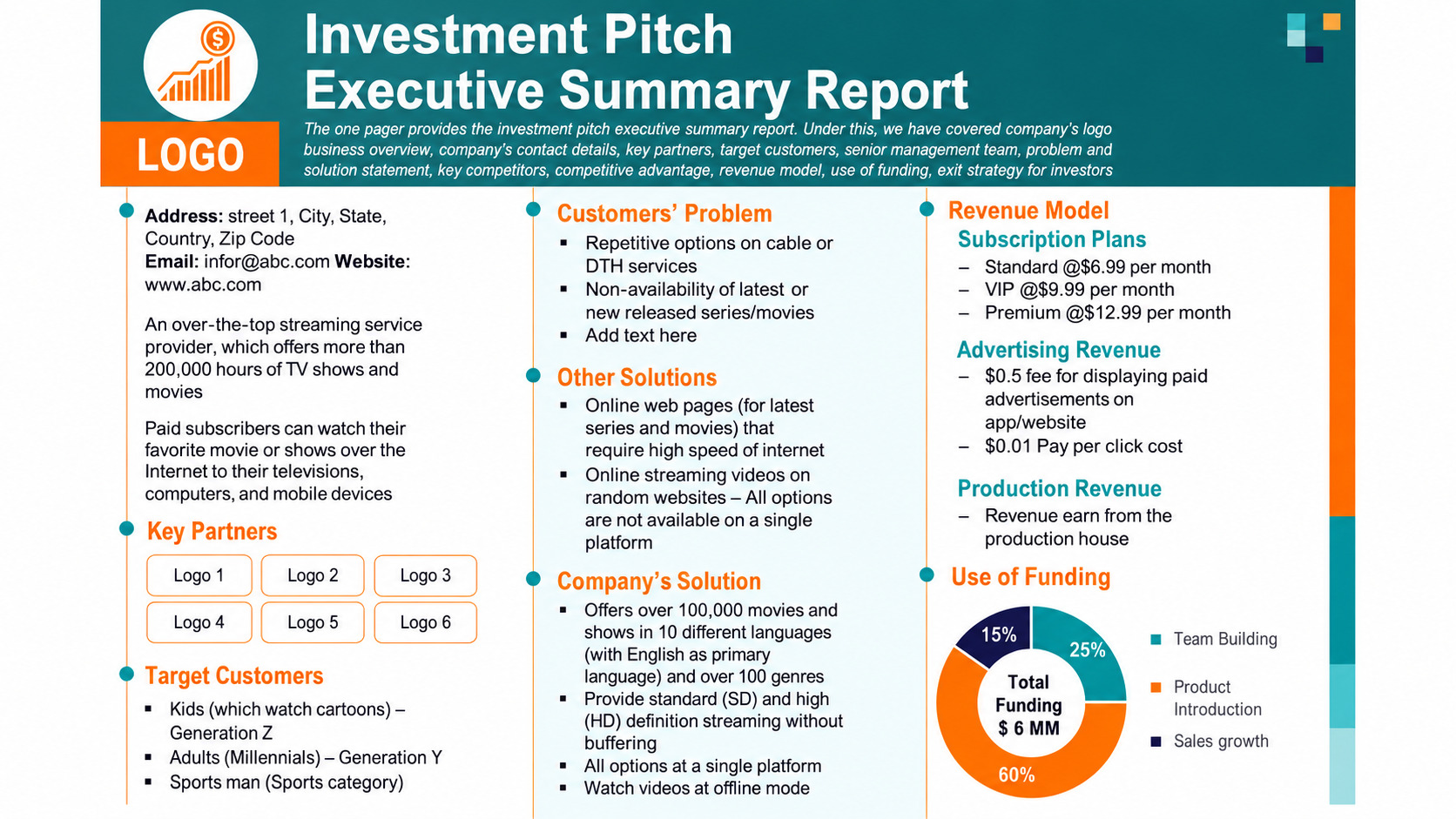
Source: slideteam.net
📍 Step 3: Build the narrative
The most effective investment proposals read like a story, not a spreadsheet. Lead with the problem, introduce the solution, show the market, prove the business model, and close with the financials and the ask. Each section should flow naturally into the next.
📍 Step 4: Be specific about the ask
Too many proposals bury or obscure the actual funding request. State clearly how much you're asking for, what you'll use it for, and what investors get in return—whether that's equity, interest, or revenue share.
📍 Step 5: Make it easy to read
Structure your proposal with clear headings, short paragraphs, and visual breaks. Use charts for financial data, icons for key points, and enough spacing to make the proposal easy to read. A dense wall of text signals either inexperience or a lack of respect for the reader's time.
📍 Step 6: Review it like an investor would
Before you send the proposal, read it with a fresh pair of eyes, or better, ask someone else to do it. Ideally, choose someone who does not know your business well.
Can they understand the opportunity? Do the numbers make sense? Are there parts where they get confused or lose interest? If they can follow the logic and see why the idea is worth a closer look, you are on the right track.
Final Thoughts
A great business investment proposal won't guarantee funding—but a weak one will almost certainly prevent it. The difference between a proposal that gets a follow-up meeting and one that gets filed away often comes down to clarity, confidence, and presentation.
✅ Show the problem clearly
✅ Support your market claims with real data and credible sources
✅ Explain how the business makes money
✅ Be honest about the financials, specific about the ask, and realistic about the plan
And don't let the format work against you. Investors are busy, inboxes are crowded, and a plain PDF is easy to overlook, no matter how good the content inside.
Make your proposal easy to remember, share and track
FAQ
What is the standard investment proposal format?
Most investment proposals follow a similar structure: executive summary, problem and solution, market opportunity, business model, financial projections, team, and the funding ask. The length varies from a concise 5-page summary to a detailed 20-page document, depending on the complexity of the opportunity and the audience.
How long should a business investment proposal be?
There's no universal rule, but shorter is usually better. A tight, well-structured 8–10-page proposal will outperform a rambling 30-page document almost every time. If you need to include detailed financial models or supporting data, add them as an appendix.
What's the difference between an investment proposal and a pitch deck?
A pitch deck is a visual presentation, typically 10–15 slides, designed to be presented live or sent as a teaser. An investment proposal is a more detailed written document meant to be read independently. Many founders use both: a pitch deck to open the conversation and a full proposal to follow up.
Can I use a template for my investment proposal?
Absolutely! A good template gives you the right structure so you can focus on crafting the content. Just make sure to customize it thoroughly. Use our Canva templates to create proposals, reports, brochures, catalogs, and other business materials. Once your design is ready, import it into FlippingBook and turn it into a polished digital document that is easy to share and track.
How do I make my investment proposal stand out?
Strong storytelling, specific financials, and professional presentation are the three biggest differentiators. Beyond the content, consider how you're delivering the proposal. An interactive flipbook that opens instantly via link, with embedded visuals and no attachment friction, could make a noticeably better impression than a static PDF document.