Many teams believe that running another survey or handing out company merch will help boost employee engagement. In reality, these short-term gestures aren’t enough. True engagement is shaped daily through communication, visibility, and shared meaning, not just isolated events.
Rather than adding more to your "to-do" list, the most effective way to improve engagement is to rethink how employees experience your company’s story. When internal communication evolves into a continuous narrative, engagement stops being a metric and starts becoming momentum. That shift changes everything.
So today, let’s talk about how to boost employee engagement by building a strong company narrative.
What Is Employee Engagement
Employee engagement is the emotional connection employees feel toward their work, their team, and their organization’s goals.
Why does it matter? Highly engaged teams are more productive, more innovative, and more loyal. Gallup research shows that companies with engaged employees consistently outperform their peers in profitability, retention, and overall performance. To foster these connections, companies need a continuous narrative—a story that ties together communication, recognition, and daily experiences.
⭐ In short, employee engagement isn’t a nice-to-have. It’s a business-critical advantage. The good news is that it can be nurtured every day—through communication, recognition, and meaningful opportunities to contribute.
What Is a Narrative
In a professional setting, a narrative is the "connective tissue" between your company’s high-level mission and an employee’s daily tasks. While traditional internal communication often feels like a series of disconnected announcements, a continuous narrative provides context and continuity. It changes the perspective so that every employee sees themselves as a key character in the company’s success, rather than just a cog in a machine.
Many leading companies have made narrative a central part of their internal engagement strategy. For example, Patagonia encourages staff to tell sustainability‑centered stories that reinforce purpose and values. Salesforce weaves its “Ohana” community narrative into everyday communication, and Airbnb shares employee experiences through internal platforms to foster global belonging.
Why a Continuous Narrative Drives Engagement
People don’t engage with isolated policies, dry reports, or static checklists—they engage with a journey. When communication shifts from bullet points to a connected narrative, engagement grows because:
- It builds belonging. Employees connect when they see their own work, wins, and voices woven into the company’s larger arc. Feeling visible within the narrative makes them more committed and motivated.
- It makes information memorable. A narrative provides the "why" that makes the "what" stick. While metrics are quickly forgotten, the story of a project’s evolution or a customer’s success resonates and spreads.
- It encourages action. Narratives inspire behavior by showing, not just telling. When employees see a consistent thread of peers innovating or overcoming challenges, they are more likely to take the initiative themselves.
- It turns communication into culture. A repeated narrative reinforces shared values and purpose. Over time, this creates a sense of identity and alignment that one-off emails simply can’t achieve.
🚀Employee engagement tool: FlippingBook
A narrative-driven engagement strategy needs the right format to thrive.
Static PDF documents often get ignored or forgotten. But when internal communication becomes interactive and easy to navigate and share, it captures attention and encourages exploration.
FlippingBook helps you convert everyday internal PDFs into engaging digital flipbooks with interactivity, clickable navigation, and built-in analytics. That means your updates aren’t just sent—they’re experienced. And when employees interact with your content, your internal communication strategy becomes continuous rather than occasional.
Create your interactive newsletter today
How to Create a Narrative
To build your company’s narrative, you need to transform employees from passive readers into active contributors, and this calls for a shift in format as well. Here are four ways to use interactive flipbooks to give your team a seat at the writer's table.
#1 Invite team members to share their wins
Recognition is one of the strongest factors of engagement. But recognition works best when it’s visible and story-driven—not buried in a Slack thread or mentioned briefly in a meeting. You can encourage employees to submit short stories about:
- Project milestones.
- Customer success moments.
- Cross-team collaboration.
- Personal growth achievements.
💡 Flipbook idea: The “Team Wins” magazine
How to use it:
- Include short employee quotes and photos in a neat pop-up gallery. This keeps the layout clean while giving employees a visible space in the company story. Seeing real faces and voices strengthens a sense of belonging.
- Embed short video shoutouts from managers. A 30-second thank-you message feels more authentic than a paragraph of text. Video adds emotion and makes recognition more memorable.
🌟Learn how you can revamp your corporate documents with FlippingBook.
#2 Highlight peer achievements consistently
Engagement increases when recognition becomes an everyday experience. When employees regularly see colleagues being acknowledged, it reinforces shared values and standards.
💡 Flipbook idea: Recognition Spotlight edition
How to use it:
- Feature short profiles of employees across teams. Use GIFs to add personality and make the content feel lively and human, not corporate.
- Make it easy to navigate with an interactive table of contents. Let readers jump to their department or topic of interest. The easier it is to explore, the more likely employees are to engage with multiple sections.
Inspire your employees with a recognition spotlight flipbook
🌟Pro-tip. FlippingBook makes sharing seamless: send your document via a direct link, embed it into your intranet, or add a QR code to physical posters to instantly connect your team to deeper resources. Whether they are at a desk or on the go, the document is always just one click away. Plus, you can create a branded digital bookshelf with all the employee documents and share it with your team via a link.
#3 Encourage idea and insight contributions
Employees feel like they belong when they are heard and not just informed. Create structured ways for team members to share, then close the loop by showing how those ideas influenced decisions. Here’s what you can suggest:
- Improvement ideas.
- Lessons learned from projects.
- Industry insights.
- Innovation proposals.
💡 Flipbook idea: Innovation & Ideas digest
How to use it:
- Embed forms and surveys, link to submission portals, or include multimedia explanations, making the process of sharing ideas transparent and dynamic.
- If the insights or proposals include confidential data, secure the flipbook with email-based access, SSO, or password protection to ensure only authorized employees can view it.
#4 Make onboarding part of the shared narrative
New hires form engagement habits early. If onboarding feels static and transactional, engagement starts weak. Instead of sending a traditional PDF onboarding packet, make it immersive.
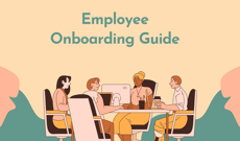
💡 Flipbook idea: Employee Onboarding guide or employee handbook
How to use it:
- Include welcome videos from leadership and team members. Thus, you build a connection immediately, especially in hybrid or remote environments.
- Add links to employee handbooks, training resources, and FAQs to give employees all the information they need right away.
Empower your employee onboarding guide
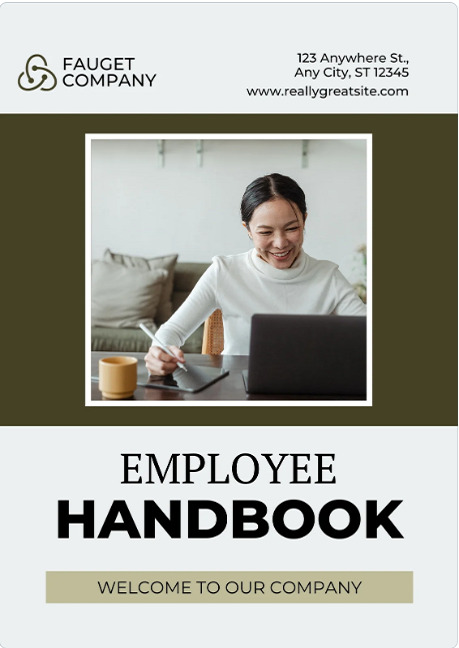
🌟 If you don’t have a PDF yet, start with free Canva handbook templates. Once designed, you can seamlessly publish them to FlippingBook, customize the content, and make it interactive—all in one workflow.
|
|
|

#5 Use analytics to understand what resonates
If engagement is a narrative, you need feedback on which chapters matter most. Interactive platforms like FlippingBook allow you to track:
- Who opens your internal flipbooks.
- How much time they spend reading.
- Which sections receive the most attention.
- What links employees click, and more.
This insight helps you refine your communication strategy over time. Instead of guessing what employees value, you see what they engage with and evolve your narrative accordingly.
🌟 When employees see their contributions featured, their voices acknowledged, and their ideas implemented, engagement becomes personal. They’re no longer reading the company story. They’re helping write it.
Boosting Employee Engagement: The Leadership Shift
Boosting employee engagement isn’t about producing more content. It’s about creating continuity. When communication is consistent, visible, and participatory, it stops being mere information delivery and starts becoming culture-building.
A continuous narrative does three things:
- Makes strategy visible. Employees understand the “why” behind decisions.
- Makes people visible. Contributions are acknowledged and celebrated.
- Makes progress visible. Wins, lessons, and milestones are easy to track.
When employees can see where they fit and influence the story, engagement becomes something they experience every day.
Interactive tools, like FlippingBook, make this continuity tangible by turning internal communication into engaging digital documents that employees can explore and contribute to.
Want to boost employee engagement with interactive flipbooks?