As a marketer well aware of the ever-increasing stakes in the marketing world, you recognize the need to stay ahead. Audience preferences are rapidly evolving, technology like AI and AR is making its mark, and expectations for marketing efforts to influence revenue are rising.
How can you keep up with these tendencies and be unique and creative with ideas for your marketing strategy? Fear not, we’ve got you covered! As you embark on the 2026 marketing journey, check out our engaging marketing ideas guide to equip yourself for business success in the new year. Let’s dive right in!
What Makes Marketing Engaging Today?
While marketing takes many forms, what truly defines success today is how engaging those efforts are. In 2026, engaging marketing is less about broadcasting messages and more about inviting participation. Audiences expect experiences that feel interactive, authentic, community-driven, and measurable. Here’s what that looks like in practice:
✨Interactive content. Quizzes, polls, calculators, interactive PDFs, and videos turn passive viewers into active participants—and keep them engaged longer.
❤️ Authentic marketing. Polished ads matter less than real voices. Brands that show real people, honest stories, and transparent values earn more trust and more attention.
💬 Community-driven experiences. Engagement grows when audiences can respond, contribute, and connect with each other, not just with the brand.
🎯 AI-driven personalization. One-size-fits-all content no longer works. Smart personalization with AI helps deliver the right message to the right person, at the right moment, and makes engagement measurable.
💡 Quick stats
Interactive content drives 2–3× higher engagement than static formats, proving that audiences don’t just want to read—they want to interact.
Innovative Marketing Ideas to Promote Your Product or Brand
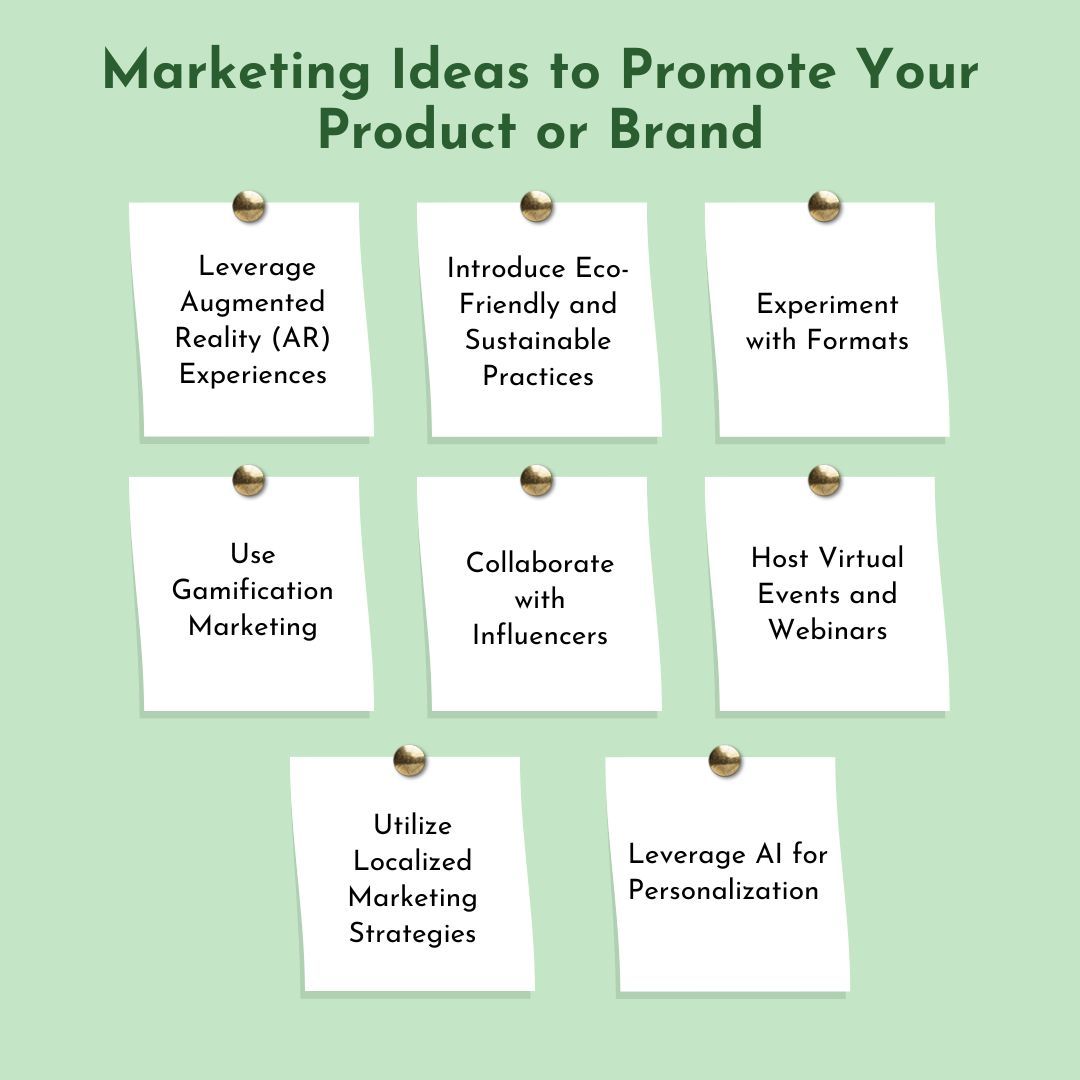
Engaging marketing ideas can be a game-changer in promoting your product or brand in 2026. Remember, the key to successful marketing is to stay authentic, engage with your audience, and use technology to create powerful and memorable experiences.
#1 Leverage Augmented Reality (AR) Experiences
Create interactive AR content that allows customers to experience your product in an unusual and captivating way. For example, augmented reality product demos can elevate your presentation of products and services, bridging the gap between physical and virtual experiences. This works great for large and complex technologies as well as household products or clothing.
For example, IKEA has an IKEA Place AR App that allows users to see how a piece of IKEA furniture will look in their space. Consumers can also redesign their entire space using IKEA decor and furnishings, from chairs and tables to rugs and even wall colors.
Takeaway: AR allows customers to experience products in immersive, interactive ways—bridging the gap between physical and digital and increasing engagement.
#2 Introduce Eco-Friendly and Sustainable Practices
Sustainable marketing is a type of marketing that considers the environmental and social impact of a company's products or services. It takes into account the needs of both the present and the future generations.
Your company’s commitment to sustainability can range from using eco-friendly materials in your products to adopting sustainable practices in your activities. Highlight these initiatives in your marketing to connect with environmentally conscious consumers. Check out some of the sustainable and creative marketing ideas:
- Commit to an environmental or social cause: choose a sustainable cause to link your company mission to. Committing to such causes long-term, organizations can contribute to innovative solutions to global challenges, such as climate change and resource depletion. Plus, you can help create a lasting culture of sustainability as your company finds ways to make a difference in your local community.
- Educate your audience: explain your sustainable mission's importance and demonstrate specific steps you've taken to support that mission. With education, consumers are more likely to understand the organization's goals and values, which could lead to increased customer engagement and loyalty.
- Print less and go digital: a great way to start a green initiative is by moving away from printing, digitizing your documents, and then expanding your initiative by partnering with other green companies. Here at FlippingBook, we have a green initiative of our own. Get featured on our website and we will plant a tree for you with Tree Nation to help global reforestation!
- Apply sustainable practices across the whole company: integrate your sustainable marketing strategy across the whole organization to create a unified, consistent message regarding your commitment to sustainability. If you make sustainability an internal priority, you ensure all activities and initiatives throughout the organization align with this core value.
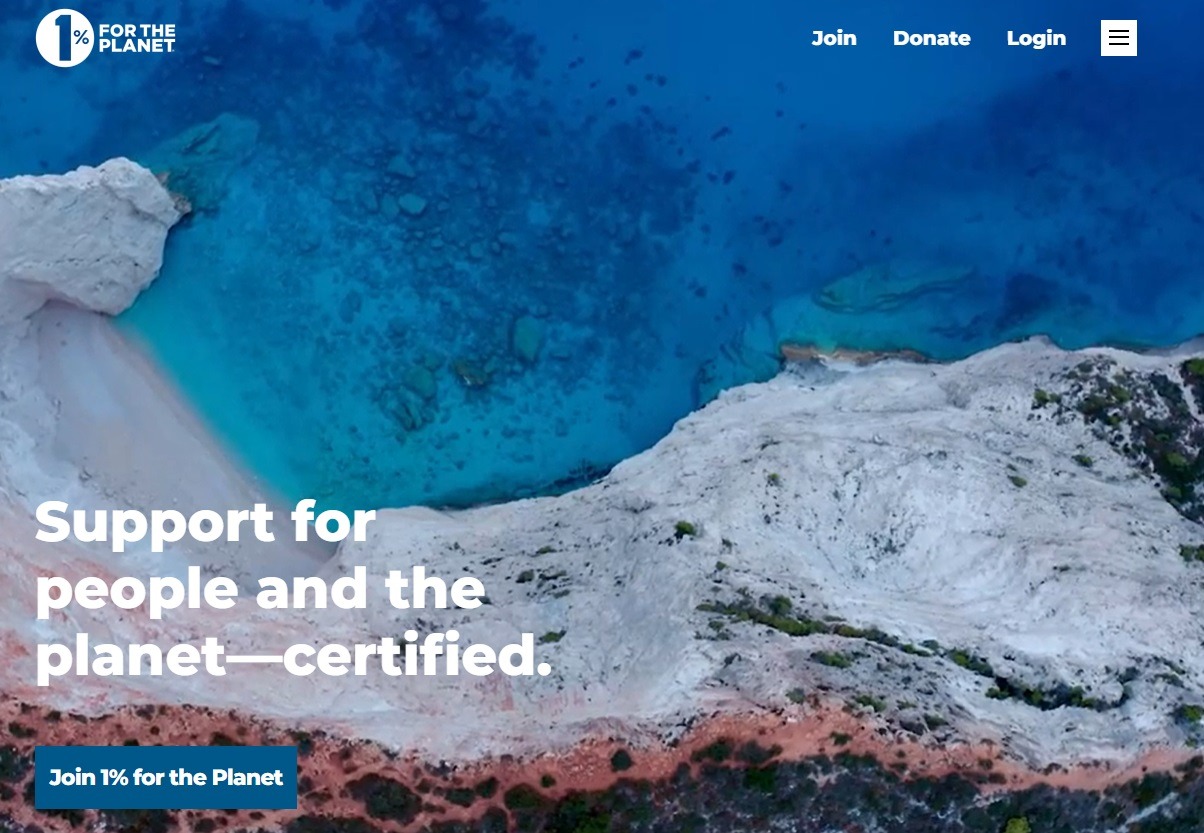
To give you an example, there’s a global initiative, called 1% for the Planet. It was founded on the idea that a company has a responsibility to give back for the use of our planet’s resources. Any business can join in and commit to donating at least 1% of annual sales directly to environmental organizations.
Takeaway: Highlighting sustainability initiatives builds trust and loyalty with environmentally conscious consumers while showing your brand’s commitment to long-term impact.
#3 Experiment with Formats
Be creative with the ways you deliver your content to the audience to increase engagement and time spent on your site and blog. Don't settle for a typical landing page; instead, enhance it with a quiz or poll to spice up your content. Embed videos to your blog posts, GIFs to your newsletters, and clickable data and infographics to your Help Center articles. Digital formats like flipbooks and ebooks can be an amazing content marketing idea to get your readers' attention right from the start.
The flipbook format gives you many opportunities to impress your audience with a fresh look, smooth page flip effect, and interactivity, such as videos, GIFs, pop-ups and image galleries, forms and quizzes, and outbound links. This way, you can combine all the essential content in one document and make it as compelling as possible. See for yourself! Check out this flipbook, created with FlippingBook, an online service for making interactive HTML5 documents out of PDFs.
Hutton & Hutton Real Estate Flipbook
Want to create you own flipbook?
Takeaway: Using diverse content formats—quizzes, polls, videos, GIFs, flipbooks—keeps audiences engaged and encourages more time spent on your content.
#4 Use Gamification Marketing
Gamification is an interactive marketing strategy example in which you use game-like elements as a means of promotion. You can develop various interactive content, such as online quizzes, website games, virtual badges, or virtual scavenger hunts that subtly promote your product while providing entertainment value to the user. Thus, you can boost engagement, build brand awareness, and increase conversion rates.
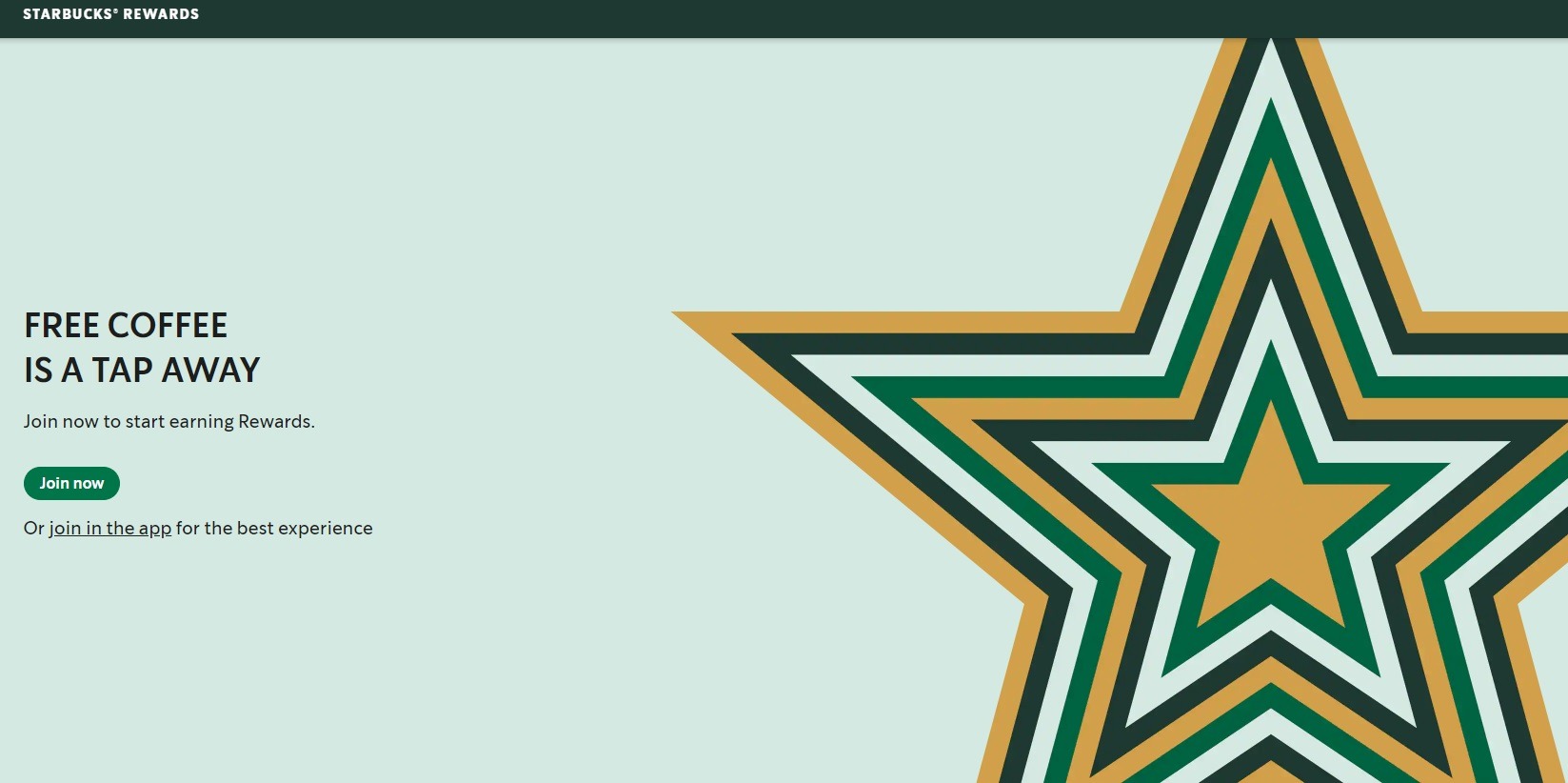
One of the most popular gamification examples based on a rewards system is Starbucks Rewards. It’s a loyalty program with a simple, but effective points-based system. You can sign up for free and start collecting member points, known, unsurprisingly, as Stars. As you earn Stars, you can redeem them for Rewards—like free food, drinks, and more.
Takeaway: Games, quizzes, and interactive challenges make engagement fun and memorable, boosting user retention and participation.
#5 Collaborate with Influencers
Partner with influencers who resonate with your brand values. This broadens your reach and lends credibility to your brand. Here are several innovative marketing ideas for collaborating with influencers:
- A sponsored post is a popular type of collaboration where an influencer promotes your brand in exchange for a fee. You can enter a long-term collaboration where the influencer posts about your brand multiple times in various formats like Instagram posts, Instagram Reels, and Instagram Stories. Or it can be a one-off post where you pay an influencer to post about your brand once.
- A giveaway involves an influencer prompting their followers to perform a specific action, like signing up for an email list or following your brand, for a chance to win something from your brand. Common actions include signing up for an email list, following your brand account, and tagging a friend.
- A brand ambassador is one step ahead of the influencer—they’re your long-term partner paid to consistently promote your brand, embody your brand’s values, and act as your company’s spokesperson.
For instance, SAP, one of the leaders in application software with thousands of customers, is no stranger to influencer marketing tactics, working with corporate executives and industry experts to expand their reach. At one event in Germany, they invited five influencers to talk about topics including machine learning, data analytics, and more. The influencers in attendance drove 50% of all of the social media mentions about this event, showing B2B can work with influencers just as well as B2C.
Takeaway: Partnering with trusted voices amplifies reach, adds authenticity, and connects your brand to relevant communities.
#6 Host Virtual Events and Webinars
Host virtual events, webinars, or live Q&A sessions to engage with your audience. This helps in building a community around your brand and positions you as a thought leader in your industry. Look at some unique marketing ideas to get you started:
- Educational webinar for existing customers: creating educational content for your customers is a proven business promotion idea to enhance brand loyalty, improve retention rates, and increase customer lifetime value (LTV). In most cases, this can take the form of a webinar, product training workshop, corporate events, or other type of virtual meetings.
- Product announcement webinar: present your new product or features online to reach a broader audience without the cost of a physical event.
- Product onboarding webinar: use a product onboarding webinar to make your new customers familiar with your product. Holding webinars instead of just sending out documentation, can show the people behind your brand and create personal relationships and higher conversion.
- Co-hosted webinar: it's a webinar that you host with another company. It allows you to get more leads than you normally would. Plus, such a webinar helps you create extra trust, especially if you're a small company that's hosting a webinar with a more reputable business in your industry.
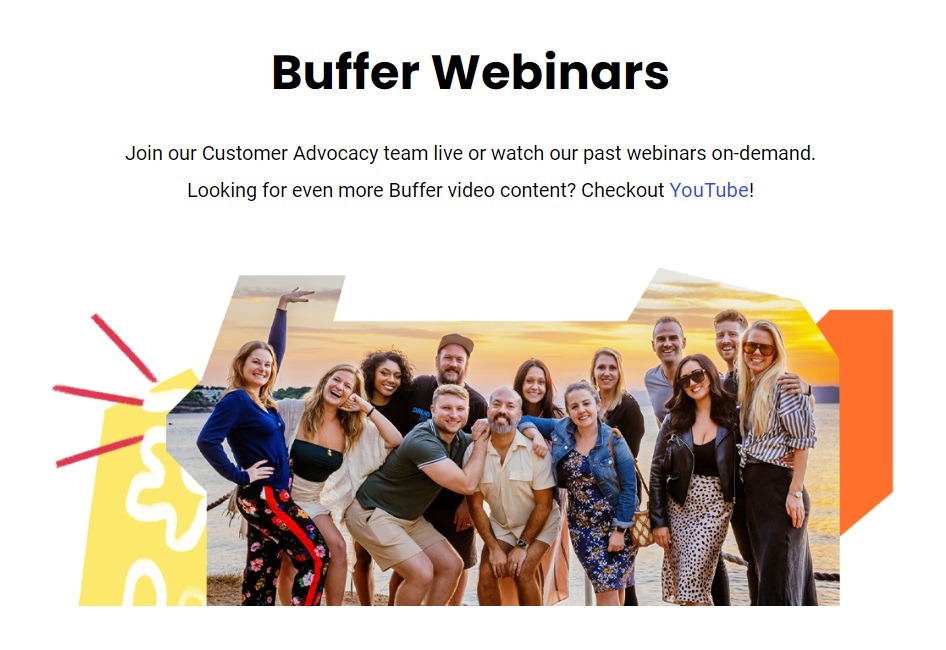
For example, Buffer webinars and live demos are excellent resources: Buffer offers tutorial videos about their product and tips on enhancing social media strategy and hosts live sessions with experts from the different departments of their team. If you plan to host a webinar in your office, it’s important to prepare everything beforehand. This includes choosing the best webinar software, planning the webinar, and checking all necessary equipment.
Takeaway: Live, real-time experiences build authority, encourage interaction, and strengthen community around your brand.
#7 Utilize Localized Marketing Strategies
Customize your marketing campaigns to suit local cultures, languages, and preferences. Analyze the geography of your website’s visitors and consider translating the most popular landings and Google ads into the languages of your audience. This helps create a deeper connection with various segments of your clients and drives more traffic.
Takeaway: Campaigns that support social causes resonate emotionally, enhancing brand perception and fostering deeper customer relationships.
#8 Leverage AI for Personalized Recommendations
AI personalization involves using AI technologies such as machine learning and deep learning to create curated and personalized experiences for users of a product or service. With personalization, you aim to get a better customer experience and satisfaction, which in return increases engagement, customer satisfaction, and conversion rates.
Takeaway: Tailored messaging and AI-driven personalization create more meaningful interactions and improve conversion rates.
Enticing Content and Social Media Marketing Ideas for Your Inspiration
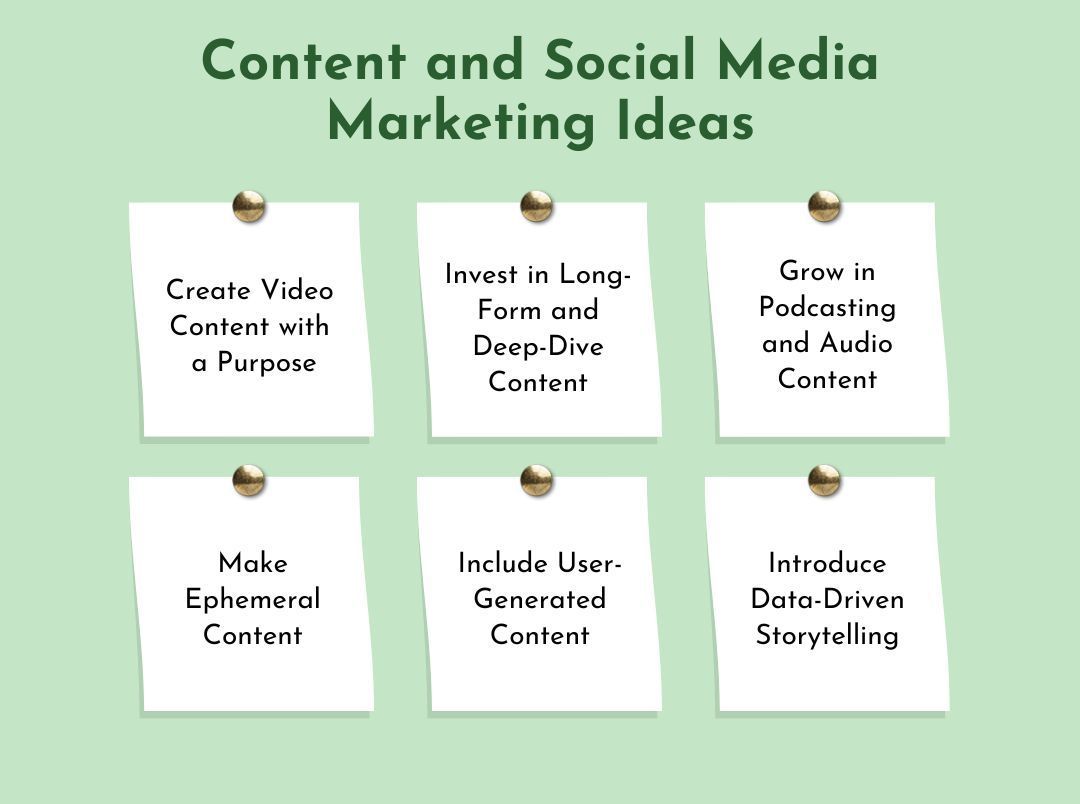
#1 Create Video Content with a Purpose
Elevate your video content by incorporating live streaming, offering behind-the-scenes glimpses, and integrating interactive elements such as Q&A sessions. Focus on brand story and authenticity to create a deeper connection with your audience. For instance, create engaging videos that tell the story of your brand or demonstrate the impact of your product.
Talking about emotional connection, Disneyland Paris’ 2018 Little Duck commercial is a great business marketing idea. It’s adorable, heartwarming, and above all else, inspiring.
Takeaway: Video content captures attention quickly, conveys information efficiently, and drives higher engagement across platforms.
#2 Invest in Long-Form and Deep-Dive Content
Invest in long-form content that provides comprehensive coverage of topics relevant to your audience. By taking a deep dive into a topic, you can demonstrate your expertise and knowledge, positioning your brand as an authority that people can trust.
What’s more, long-form content can be more captivating for your audience. When you offer in-depth information and analysis, your audience is more likely to stay engaged and invested in your content, rather than quickly move on to something else.
An ebook can be a perfect way to share your valuable insights with the world. Here at FlippingBook, we love publishing interactive ebooks with our research, step-by-step guides, and inspiring ideas. This format looks fresh and grabs your readers' attention from the first pages. Plus, it’s easy to share via a direct link, on social media, or embed into a website, as we did below.
The latest research we’ve published is an AI in Content Marketing Research Report. We surveyed over 650 professionals to see which content they prefer—texts and images created by AI or by people. What made our research unique was that the surveyees weren’t aware AI was involved at all.
Create your ebook right away
Takeaway: Providing in-depth guides, tutorials, and comprehensive resources positions your brand as an authority, keeps audiences engaged longer, and drives higher-quality leads.
#3 Grow in Podcasting and Audio Content
Continue to grow in podcasting or explore audio content opportunities like branded audio series or collaborations with existing podcasts. Audio content offers a direct way to engage with an audience and caters to the modern lifestyle when people prefer audio and podcasts to written content during commutes or while multitasking. Here are several creative marketing ideas for your podcast inspiration:
- Ask the expert: if you have several teams within your company, leverage their expertise to provide more in-depth insights into various topic areas that are relevant to your target audiences. A podcast with different episodes and narrators will be key to captivating users.
- Cover industry news and events: keep your audience in touch with the latest developments, news, and events in your industry. You can even attend some of the major events to be the first to deliver fresh news and get comments from the experts on site.
- Chat with your clients: podcasts are an invaluable way to share stories quickly; and what better story to tell than a success story? Talk to an existing client and ask them questions about their relationship with your business. This will provide a convincing, real-time experience for listeners while giving your B2B company a case study for future work.
As far as B2B podcasts are concerned, you can check out the B2B Growth podcast by Sweet Fish. It’s an interview podcast with a host who has an extensive background in sales and marketing. Each episode introduces a new guest in the B2B world to discuss their specialty topic, so there’s something for everyone in the industry.
Takeaway: Podcasting and audio content let you reach audiences on the go, build a loyal following, and deliver your message in a personal, engaging way that strengthens brand connection.
#4 Include User-Generated Content
Showcase user-generated content to build community and trust. This can include customer testimonials, user-submitted photos or videos, and collaborative projects. How to encourage your clients to share? Here’s what you can do:
- Start a trend, challenge, or contest and invite your users to take part in it. Create a hashtag for them to use and feature the most original content in your posts and stories on social media.
- The opportunity to get featured on a brand’s social media is a great incentive in itself, but a rewards system can accelerate participation in creating UGC. There are many ways to reward customers, from 50 percent-off discount codes to free concert tickets. Think of sustainable tactics for your audience, brand, and budget.
- Take part in UGC yourself: if your goal is to be more genuine to your audience, don’t shy away from having your employees participate in creating UGC. After all, no one knows the product better than the people who work directly with it every day.
At FlippingBook, we ask our clients to share their thoughts about working with us and post their customer reviews on our YouTube channel.
Takeaway: Featuring customer content builds trust, validates your product, and encourages more community involvement.
#5 Introduce Data-Driven Storytelling
Data storytelling is a method of using data and analytics to build a compelling narrative that’s tailored to a specific audience. You can use data and analytics to tell compelling stories. This can involve turning internal data into interesting insights for your audience or using data to personalize stories for different segments of your audience.

Spotify capitalizes on data storytelling through their annual marketing campaign called ‘Spotify Wrapped’, which allows users to look back at their last year on the platform. In addition to seeing how often they listened to music, users also get insights into what their top streamed artists are, which songs they listened to most, and more.
Takeaway: Visualizing data and insights helps audiences understand value, increases credibility, and supports informed decisions.
Quick Wins: 10 Fast Marketing Ideas You Can Try This Month
Not every campaign needs months of planning or a big budget. These quick marketing ideas are simple to launch, low-risk, and designed to drive engagement fast.
🖱️ Turn one static asset into interactive content
Add links, video, or CTAs to an existing flipbook, presentation, or brochure to instantly boost engagement.
💬 Run a one-question poll on social media
Easy to launch, highly engaging, and great for sparking conversations.
✉️ Refresh an old email with personalization
Update subject lines or CTAs using basic segmentation for a quick engagement lift.
🎯 Repurpose a top-performing post
Turn a blog post into a carousel, short video, or checklist.
👥 Highlight a customer or community story
Authentic, trust-building, and perfect for social or email content.
🧩 Create a simple quiz or checklist
Lightweight interactive content that works well even on a tight timeline.
📨 Send one value-first email
No selling—just insights, tips, or inspiration your audience can actually use.
That’s it! We hope that our list of innovative marketing ideas will help you stand out, build more brand awareness, and bring in new clients. Good luck in 2026!