

Сompetition for audience attention has always been intense, and in higher education, it’s even more complex. Unlike many other industries, universities face a longer decision-making cycle, multiple stakeholders, and a strong need to build trust and credibility long before a student ever submits an application.
Institutions must not only maintain enrollment numbers but also clearly communicate their value to prospective students and their families. This means delivering engaging, informative content at every stage of the decision-making journey—from initial awareness to final enrollment.
The pandemic accelerated the shift to a digital-first environment, forcing education to move online. As a result, institutions must now adapt quickly to an ever-evolving digital landscape. In this guide, you’ll learn why content is important in education marketing, the best interactive content types to attract prospective students, and best practices for engaging them effectively.
What Is Education Marketing?
Education marketing refers to the strategies and tactics institutions use to show the value of their academic programs, campus experience, and outcomes to prospective students and their families.
Effective education marketing goes beyond promotion. It focuses on creating meaningful connections by:
- Building trust in the institution.
- Highlighting what makes it unique.
- Fostering a sense of community among students, alumni, and staff.
- Meeting the evolving expectations of today’s audiences.
Why Is Content Important in Education Marketing Today?
Content plays a central role in education marketing. For prospective students and their families, it is often the primary way they explore institutions, compare programs, and determine whether an organization is the right fit.
Whether through an institution’s website, social media, or other marketing channels, content serves as a key touchpoint throughout the decision-making process. It typically includes essential information such as:
- academic programs;
- admission requirements;
- enrollment processes;
- campus life;
- alumni stories.
Each of these elements matters, as even a single piece of content can influence a student’s final decision.
Unlike many other industries, education is not driven by impulse. Prospective students don’t choose an institution the way they might buy a product after seeing a compelling ad. Instead, they take time to research, compare options, and make thoughtful, long-term decisions.
This is what makes high-quality content so essential. From brochures and digital handbooks to websites and social media, content is often the first, and most frequent, point of contact between an institution and its audience.
That’s why you need to start improving education marketing with the content itself: how it is structured, how engaging it is, and how effectively it connects with your audience.
Interactive Content: The New Frontier for Education Marketing
Interactive content is becoming increasingly popular in digital marketing because it is immersive, engaging, and offers a more dynamic and involved user experience.
🌟According to industry data, interactive content consistently outperforms static formats, generating 2–3 times higher engagement.
In addition to higher engagement, interactive content often improves conversion rates. It increases time spent on page—both critical metrics in education marketing, where decision cycles are longer and more research-driven.
Compared to traditional content, it captures attention more effectively, encourages exploration, and keeps users engaged for longer. There are many interactive formats—from videos to virtual tours and interactive infographics. Let’s take a look at the key ones and how you can use them effectively.
6 Interactive Formats to Increase Student Engagement with Examples from Leading Universities
📹#1 Videos
It’s no secret that people often prefer watching videos over reading text. In fact, 91% of businesses use video as a marketing tool, highlighting just how essential this format has become. Short-form video, in particular, has dominated social media in recent years. Platforms like TikTok and Instagram have completely reshaped how we consume content. Combined with shorter attention spans, it’s easy to see why this format works so well.
Gen Z students, now the primary audience for higher education, spend significant time on their phones consuming short-form videos and reels. With video, you can showcase campus life, academic culture, and community in a much more personal and visual way.
They also tends to trust peer-generated and authentic content more than polished brand messaging, making student-led videos especially effective. Through student and faculty interviews, behind-the-scenes content, and event highlights, you can authentically bring your stories to life.
Best video ideas:
- Short introductory videos about the university.
- Campus overview tours.
- Alumni success stories and career journeys.
- Interviews with current students.
- Program overviews and “day in the life” content.
- Student events and campus activities.
- Announcements of upcoming virtual events.
The key is to make videos both engaging and valuable. They should capture attention while still providing useful and relevant information.
Check out this video by Cambridge University, which demonstrates how to use visual storytelling to engage prospective students. Through campus scenes, student experiences, and authentic moments, the video conveys what it feels like to be part of the university community.
🗺️#2 Virtual events and tours
Many institutions attract students from different cities and countries. Virtual tours offer an accessible way to showcase campus life and help prospective students understand how everything is structured.
This format is especially valuable for students researching universities online, as it removes geographical barriers and makes the experience more inclusive.
While in-person events remain important, virtual and hybrid formats have become essential. They allow students to participate without travel costs and often create a more comfortable environment for interaction. Interestingly, people are sometimes more engaged and willing to ask questions in an online setting.
Top ideas for virtual events:
- Virtual open days and campus tours.
- Live Q&A sessions with admissions teams or faculty.
- Online sample lectures or mini-courses.
- Webinars on application tips and program selection.
- Student panels or “ask me anything” sessions.
- Virtual career talks with alumni.
Another major advantage of virtual formats is measurability. With analytics tools, you can track attendance, engagement time, and user behavior—gaining valuable insights to continuously improve your education marketing strategy. This data can be directly tied to lead scoring and CRM systems, helping admissions teams prioritize and nurture the most engaged prospects.
Many leading universities now offer virtual campus tours to help prospective students explore their campuses from anywhere in the world. Stanford University's interactive Campus Walk is a great example of how you can recreate the experience of visiting campus online. The interactive map allows visitors to explore key locations across campus, with each stop featuring photos and additional information about the building or landmark, making it easy to learn about the university at their own pace.
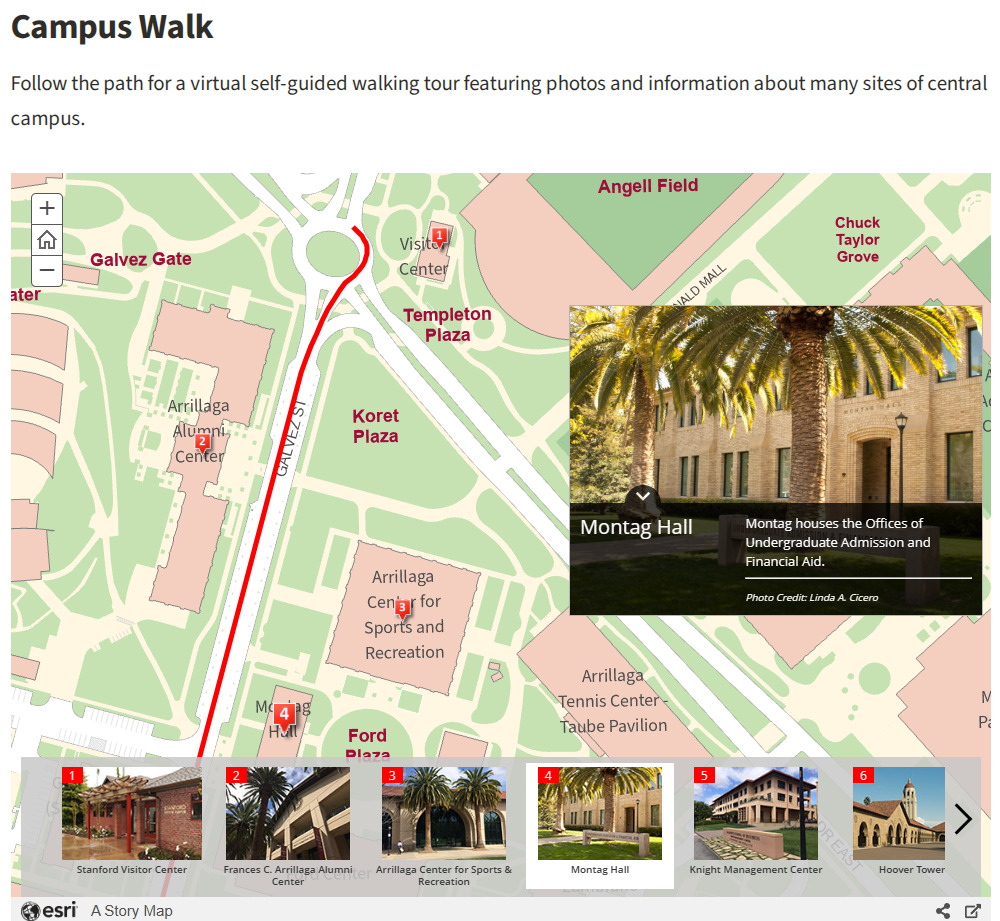
Source: Stanford University
✨#3 Interactive flipbooks
Every institution produces a large volume of materials: prospectuses, brochures, program guides, schedules, student handbooks, and more. While some of these may remain in print, many are better suited for digital formats.
Tools like FlippingBook allow you to convert static PDFs into interactive flipbooks enriched with videos, images, GIFs, and other elements. Flipbooks have become a powerful tool in education marketing, helping present information in a more engaging, accessible, and measurable way.
Best ideas for using flipbooks:
- Interactive prospectuses with embedded alumni video testimonials, clickable images, and interactive elements such as polls or forms.
- Digital brochures featuring videos about university life, campus culture, and academic programs.
- Interactive program guides with clickable links, embedded videos, and lead capture forms to collect readers' emails.
- Digital materials that include an accessible PDF version to meet institutional guidelines and accessibility requirements.
- Digital bookshelves with multiple documents organized by folders and topics.
- Interactive student handbooks with built-in analytics, allowing institutions to track views, engagement, and the most visited pages.
- Digital annual reports with animated charts, pop-ups, and interactive tables of contents for easier navigation and deeper engagement.
Flip through this interactive digital prospectus for undergraduate students from Swansea University. It demonstrates how to present information in a more creative and immersive way. Enriched with videos, GIFs, clickable links, and other multimedia elements, the prospectus encourages prospective students to spend more time exploring the content while delivering a more engaging and user-friendly reading experience.
Swansea University 2027 Undergraduate Prospectus
📊#4 Interactive infographics
Some marketers argue that infographics are no longer effective—and to some extent, they’re right. Traditional, static infographics can feel overwhelming and difficult to digest. However, modern interactive infographics are a completely different story.
Today’s tools make it possible to create animated, clickable, and layered content that makes complex data easier to understand and more engaging to explore. Users can interact with elements, open additional information in pop-ups, or even watch embedded videos for deeper context. This shift from passive reading to active exploration significantly improves engagement, especially considering that visual content is processed up to 60 times faster than text and improves information retention.
Best ideas for interactive infographics:
- Step-by-step admission process breakdowns.
- Program comparison charts with clickable details.
- Career outcomes and salary statistics by degree.
- “Student journey” timelines from application to graduation.
- Campus statistics with interactive highlights.
- Scholarship and funding options explained visually.
Interactive visuals help reduce cognitive load, making complex information, such as admission processes or program comparisons, easier to process and remember.
Interactive infographics can help universities present complex information in a more engaging and digestible way. For example, The Ohio State University uses interactive data visualizations to help users explore institutional facts and statistics. Instead of scrolling through static numbers, visitors can interact with the data, apply filters, and find the information most relevant to them.
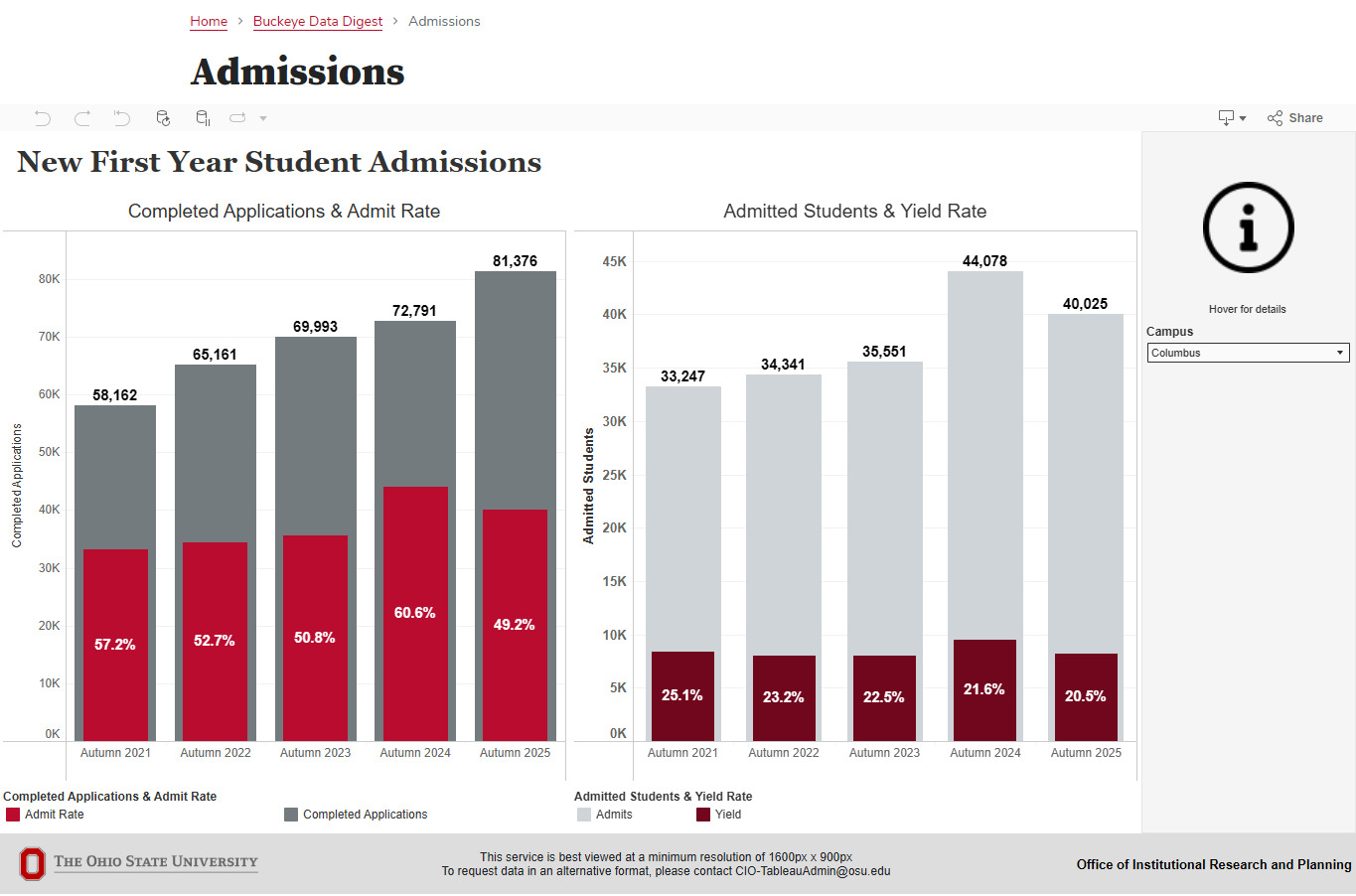
Source: The Ohio State University
🤖#5 AI tools and chatbots
Artificial intelligence is rapidly transforming how higher education institutions attract and convert prospective students. With limited marketing resources and growing expectations for instant responses, AI helps scale communication without losing personalization.
When used strategically, AI can streamline workflows and improve lead nurturing, delivering more relevant experiences throughout the enrollment journey.
How you can use AI in marketing:
- AI-powered chatbots on university websites to answer FAQs, guide users, and capture inquiries 24/7.
- Predictive program recommendations based on user behavior and engagement data.
- AI-assisted email workflows that adapt messaging and timing.
- Automated content optimization, including subject line testing and performance insights.
- AI is not just a tool for automation—it’s increasingly becoming a decision-support system, helping identify patterns in student behavior and predict intent.
Take a look at this example from Wichita State University, which uses WuBot, an AI-powered chatbot that helps prospective students navigate admissions information, answer common questions, and find relevant resources at any time. This type of AI assistant helps you provide instant support throughout the enrollment journey while reducing the workload on admissions teams.
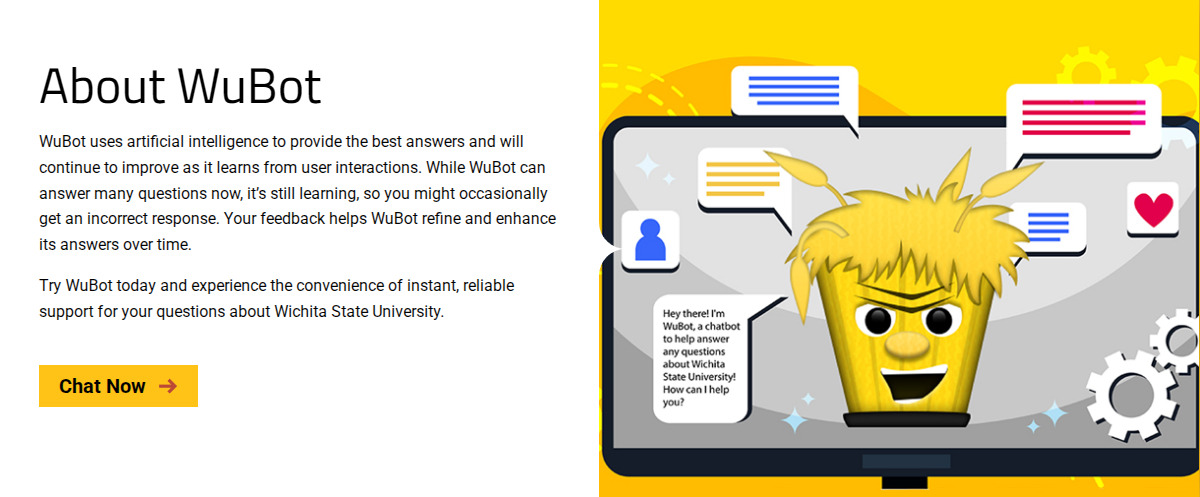
Source: Wichita State University
💙#6 Personalized communication
Today’s prospective students expect more than generic outreach. They interact with multiple institutions and content formats before making a decision. Personalization is no longer a competitive advantage—it’s a baseline expectation.
If you tailor communication to students' interests, location, and stage in the journey, you’re far more likely to build trust and drive meaningful engagement. Personalized experiences significantly increase conversion rates, as students feel more understood and supported.
How to personalize communication:
- Segmented email campaigns based on study level, interests, location, or application stage.
- Dynamic website content that adapts to user behavior.
- Personalized landing pages for campaigns and recruitment regions.
- Targeted digital ads based on previous interactions.
For example, UC Davis complements its digital viewbook with personalized email communication tailored to students' academic interests and goals. This approach delivers more relevant information throughout the enrollment journey while creating a more personalized admissions experience.
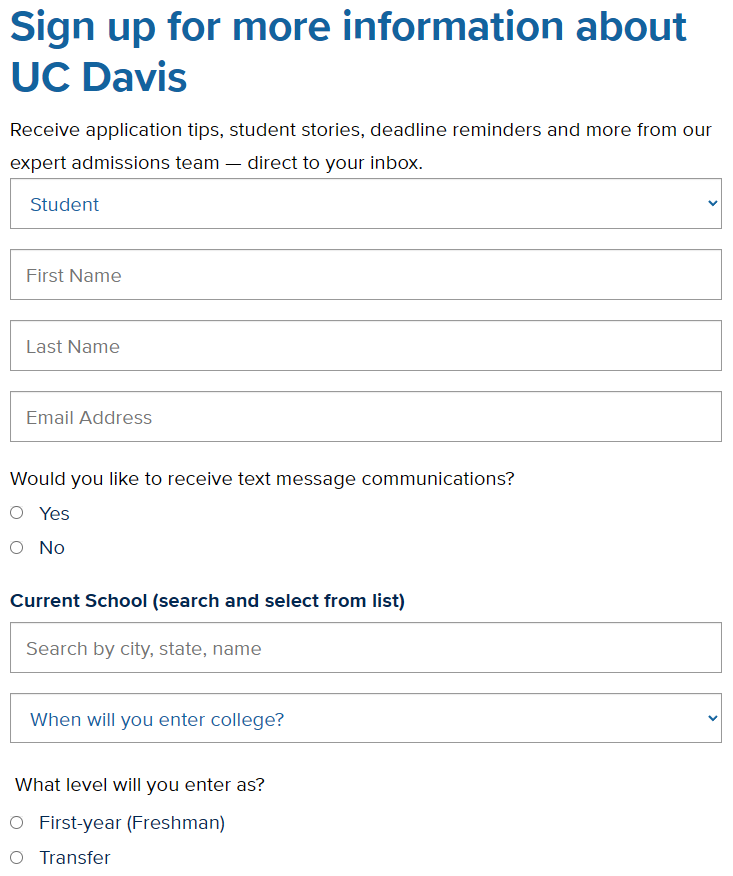
Source: UC Davis
Whether you're using videos, virtual tours, interactive publications, or AI-powered tools, accessibility and usability should remain a priority. Most modern interactive formats are designed to work seamlessly across devices, which is especially important given that mobile devices account for over 60% of global internet traffic.
Traditional formats like PDFs or Word documents can be inconvenient on mobile devices, often requiring downloads, zooming, and excessive scrolling. Interactive content, on the other hand, is typically web-based, responsive, and easy to navigate across devices, making it far more accessible and user-friendly for prospective students.
Why Educational Institutions Are Switching from PDFs to Interactive Flipbooks
While interactive content comes in many forms, interactive flipbooks deserve special attention. Educational institutions already create a large volume of digital materials—from prospectuses and program guides to student handbooks and annual reports.
Interactive flipbooks do more than modernize PDFs—they help you create more engaging, measurable, and accessible content. Here are some of the key benefits they bring to your education marketing.
📨Share content instantly and keep it up to date
Flipbooks are available via direct links, making them easy to share across any channel. Content updates take just one click—no need to redistribute files or worry about outdated versions. This ensures that students always have access to the latest information.
✨Encourage deeper student engagement
Flipbooks allow you to add campus videos, welcome messages from university leaders, student testimonials, quizzes, polls and surveys via Typeform, Google, or Microsoft Forms, encouraging readers to spend more time exploring materials.
⚡According to FlippingBook's research, 44% of flipbooks with interactive educational content are viewed for more than one minute, compared to 30% without interactivity. 54% of interactive flipbooks are viewed beyond the halfway point.
These results show that interactive formats not only capture attention more effectively but also keep audiences engaged longer than static materials.
📚Explore this interactive coursebook to see how videos, GIFs, pop-ups with additional information, and quizzes can transform a static PDF into a more engaging learning experience.
🌍Lower printing costs while supporting sustainability goals
Many educational institutions are looking for ways to reduce their environmental footprint. Moving frequently used materials to digital formats can help decrease reliance on printed documents while also reducing the costs associated with printing, storage, and distribution. Digital materials are also easier to update, eliminating the need to reprint documents whenever information changes.
🌱 FlippingBook’s research shows that institutions can save approximately $2,600 per month by switching to digital flipbooks, based on an average of 30 documents per month and standard printing estimates.
Because we no longer have the need to print the Course Directory, we save over $20K per year in printing costs.

🎨Maintain a consistent digital brand experience
Brand consistency plays an important role in education marketing. With flipbooks, you can maintain a unified visual identity across your website, social media channels, and digital publications, strengthening recognition and building trust with prospective students. The FlippingBook + Canva integration also makes it easy to transform Canva designs into interactive flipbooks while keeping your institution's branding consistent.
📑Make educational materials accessible
Accessibility is an increasingly important consideration for educational institutions. Creating accessible digital content can be complex, especially when managing large volumes of documents. Flipbooks can include a dedicated accessible PDF version for download, while accessibility features help make digital publications easier to navigate for users with different needs.
Interactive flipbooks help you turn static PDFs into engaging digital experiences. They improve accessibility, strengthen your brand, provide valuable engagement insights, and make your content easier to share, update, and manage.
How to Leverage Education Content Marketing for Maximum Impact
Content plays a central role in higher education marketing, helping institutions inform, engage, and guide prospective students throughout their decision-making journey. However, creating great content is only the first step. To achieve meaningful results, you also need a strategy for distributing, optimizing, and repurposing that content.
Content repurposing
You can extend the value of your content by repurposing it across formats. For example, a blog post can be turned into a short video or infographic, while a webinar can evolve into a series of social media snippets. This approach not only saves time but also helps reach audiences across different channels and content preferences.
📚For instance, you can repurpose several related blog posts into a comprehensive interactive ebook. Explore this education guide to see how multiple pieces of content can be combined into a single engaging resource.
Transform Your Educational Materials
SEO and content optimization
To maximize visibility, content should be optimized for search engines and aligned with how prospective students actually search for information. This includes targeting long-tail keywords, answering specific user queries, and structuring content in a clear, accessible way. Well-optimized content continues to attract traffic long after it’s published, making it a long-term asset.
Building a content ecosystem
Rather than relying on one-off campaigns, you should focus on building a connected content ecosystem. A mix of blog posts, videos, interactive content, and downloadable resources can work together to guide students through every stage of the decision-making journey from awareness to enrollment.
Final Thoughts
Content marketing in education will only continue to grow in importance. Interactive formats, AI-powered tools, and personalization are quickly becoming the foundation of effective engagement strategies.
To achieve meaningful results, you need to go beyond simply creating content. The focus should be on delivering the right content, in the right format, at the right time, while continuously optimizing it based on data and user behavior.
Institutions that invest in engaging, personalized, and data-driven content experiences will be better positioned to build trust and ultimately improve both enrollment and retention.
