Every day, your customers receive dozens of messages: generic emails, broad ad campaigns, mass-produced content. Some emails get ignored—others, when they feel irrelevant, can do more damage than no message at all. According to McKinsey, 76% of consumers feel frustrated when brands fail to personalize their experience.
When content speaks directly to someone's needs, role, or moment in the buying journey, people pay attention. And act. In this article, we break down what content personalization looks like in practice: which formats work best, real examples, and exact steps that will help you get there.
What Is Content Personalization?
Content personalization is how brands tailor their communications to a specific person or audience segment, based on who they are, what they need, and where they are in their relationship with your brand.
📝 True personalization means adapting and delivering the right message at the right moment, based on where the customer is in their buyer journey.
Consider how differently the same brand needs to communicate across different audience segments:
- A landing page that welcomes a first-time visitor looks nothing like one built for a customer ready to buy.
- A proposal for a decision-maker at an enterprise company is a different conversation than one made for a small business owner.
- A newsletter for an existing client feels very different from an onboarding sequence sent right after a demo.
Done well, personalization makes customers feel seen and understood. And that feeling is what drives engagement, trust, and conversions.
Why Personalization in Digital Marketing Matters
Personalization is a prerequisite. Studies show that fast-growing companies drive 40% more revenue from personalization than their slower-growing competitors. The gap between them usually comes down to content that speaks to the person, not the crowd.
💡 Insight
According to a Salesforce study of over 17,000 consumers and business buyers, 56% expect all offers to be personalized.
And if you still have any doubts about the importance of personalized content, consider this: according to Deloitte, 67% of consumers spend more with brands whose personalization reflects an understanding of their specific needs.
One of the biggest misconceptions holding brands back from personalization is the assumption that it means producing more content. In reality, personalization is not about volume, but about relevance. And that's where targeting can help.
Targeting and Personalization: How They Work Together
Targeting and personalization are often used interchangeably, but they serve different roles. Understanding the distinction is the first step toward a more effective strategy.
- Targeting is the "Who". It’s the process of identifying the right audience based on demographics, behavior, or company size.
- Personalization is the "What". It’s the act of tailoring the message, format, and timing so the content feels specific to that person.
📝 Targeting ensures your content reaches the right doorstep. Personalization makes sure the person on the other side actually wants to open the door.
See the key differences for yourself:
| Feature | Targeting | Personalization |
| Core question | Who are we talking to? | What do we say to them? |
| Primary goal | Reach and efficiency | Relevance and resonance |
| Focus | Groups and segments | Individual needs and intent |
| The outcome | Your content is found | Your content drives action |
Targeted content marketing works as the foundation: you define the audience first, and then shape the message through personalization.
Types of Personalized Content (with Examples)
Personalization shows up differently depending on where your audience is and what you're trying to move them to do. Now, let’s explore the most popular types of content personalization and how innovative brands create truly tailored experiences.
🌟 Emails
Personalized email has moved well past "Hi [First Name]" or choosing the right subject line for the message. Today's most effective personalized emails are built around individual behavior, so that every message feels genuinely relevant.
✅ Example: Grammarly’s Weekly Insights. Grammarly sends a "Writing Update" that gamifies user data, comparing your productivity and accuracy to the rest of the community. This smart initiative taps into the user’s motivation by turning performance data into a sense of achievement. By triggering curiosity and a healthy competitive streak, Grammarly makes users want to improve, which naturally leads to more frequent tool usage.
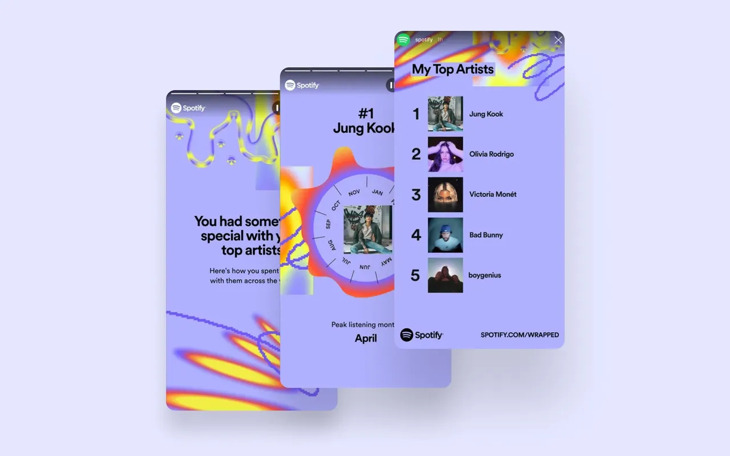
Source: customer.io
🌟 Interactive content
Interactive formats allow users to "choose their own adventure," providing brands with deeper behavioral data (like what a user clicks or explores) to fuel future rounds of personalization.
Among the most effective interactive elements are:
- Quizzes
- Video content
- Engaging layouts with GIFs and image pop-ups
✅ Example: FlippingBook digital flipbooks belong in this category as a high-impact interactive format for targeted segments and one-to-one personalization. Converting your static documents into flipbooks opens the door for dynamic content personalization, making it easy to tailor your message for specific use cases, for example:
- University presentations: Instead of sending generic brochures, universities can highlight specific programs, campus life, and admission tracks based on a student’s queries and interests.
- Onboarding manuals: HR teams can provide interactive training manuals that link directly to the tools and documentation an employee needs for their particular role.
- Tailored project proposals: Companies can deliver proposals featuring the client’s name and industry-specific context, so the document becomes a "market of one."
Swansea University 2027 Undergraduate Prospectus
Personalize your audience experience
🌟 Landing pages
There are plenty of content personalization tools that let modern landing pages adapt headlines, images, and CTAs based on a visitor’s industry or where they came from. For example, someone clicking through a LinkedIn ad targeting CEOs will see a different value proposition than a visitor arriving from a Google search for "easy project management tools."
✅ Example: Mutiny. If a visitor arrives from a FinTech company, the site’s logos, case studies, and terminology automatically shift to reflect FinTech pain points, making the brand feel like a specialist for that specific visitor.
🌟 ABM outreach
Account-Based Marketing (ABM) is the opposite of generic outreach. Instead of sending the same message to a broad audience, ABM means building a content experience around a specific target account—one that speaks directly to the people making the decision.
📝 A simple analogy helps here: ABM outreach is a handwritten letter, not a flyer. It will work only if the recipient feels that you took your time to make it personal.
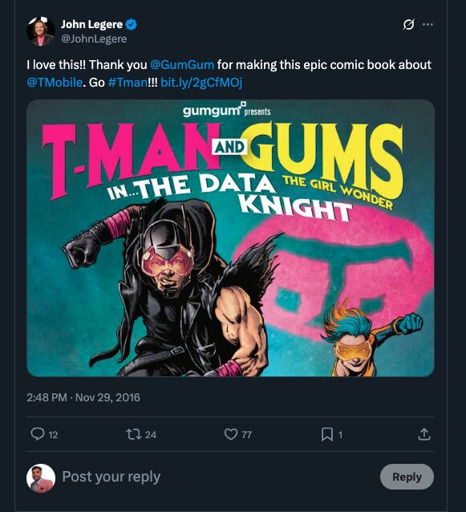
✅ Example: GumGum’s T-Mobile Campaign. When GumGum (an advertising tech company) wanted to win T-Mobile's business, they discovered the CEO was a devoted Batman fan. So, they built a custom comic book around it, called T-Man and G-Man, and it went viral inside T-Mobile's office. They closed the deal almost immediately.
✅ Example: FlippingBook is a go-to for Sales, Marketing, and Success teams doing impactful ABM. Personalized proposals, catalogs, and brochures in flipbook format help you show prospects you understand their needs, highlight what matters most, and stay memorable in a way a PDF attachment never can.
See how others are making this shift: Read how a leader in the privacy industry replaced 50-page PDFs with interactive documents that prospects actually finish reading.
Create content that gets noticed
4 Reasons Flipbooks Are Your Secret Weapon for Personalization
While there are many ways to personalize content, documents remain the backbone of business communication. However, traditional PDFs are a black box—once you hit send, you lose all visibility. Flipbooks change that.
Here are four ways flipbooks help you cut through the noise, show you understand your audience, and drive real engagement:
✅ 1. You can brand your documents for a specific client and embed interactive elements that match their needs and priorities.
💡 Use case: A real estate agency can brand a listing brochure with the property's shot on the cover, neighborhood highlights, and an embedded video walkthrough—everything a seller needs to feel confident they chose the right agency.
Transform your content marketing today
✅ 2. Update content in real time without resending a link. This way, the recipient always sees the latest version.
💡 Use case: If pricing changes the day after you send a proposal, you update it once, and the client sees the new version automatically, no awkward "please ignore the previous attachment" emails.
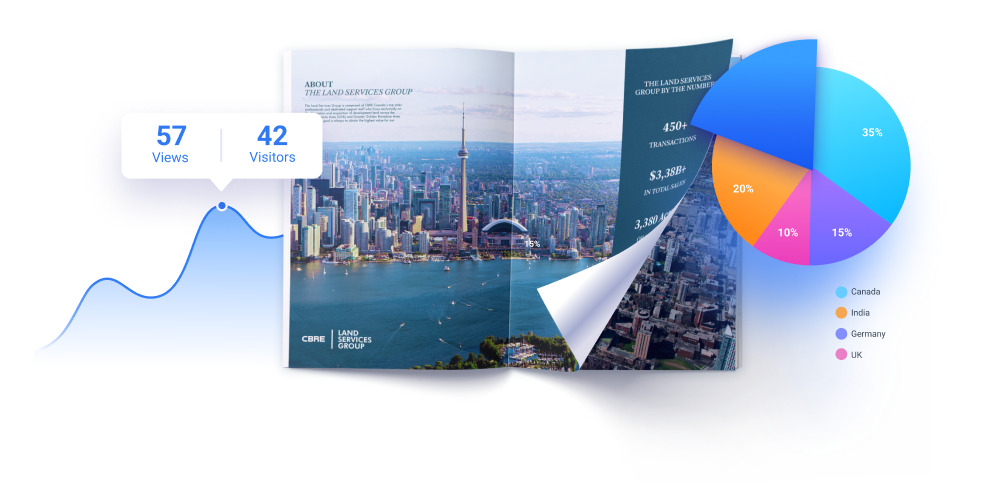
✅ 3. Create a unique trackable link for each recipient and see exactly which pages they read, how long they stayed, and whether they came back.
💡 Use case: A sales rep can see that a CFO spent four minutes on the ROI page but skipped the product overview entirely, and tailor the follow-up conversation accordingly.
✅ 4. Turn your delivery into a discovery tool. With built-in analytics, you no longer need to "move blind." By seeing where a prospect lingered and where they lost interest, you can skip the generic follow-up and get straight to what matters.
💡 Use case: A consulting firm sends a service guide. The analytics show the client focused on "Digital transformation" but skipped "Case studies." The consultant uses these insights to lead the next call with a live demo instead of a slide deck.
How to Personalize Content: A Step-by-Step Guide
You don't need a room full of developers to get personalization right. With a clear process and collected data, you can stop guessing what your audience wants and start delivering it. Here’s a simple, five-step plan to get you there.
🌟 1. Know your audience
Personalization starts by moving past basic data like job titles, age, or locations. To truly connect, you need to segment based on intent and behavior. Group your audience by their industry and specific pain points, but don’t stop there.
- Ask: What keeps them up at night? What are they trying to solve right now?
- Look for an emotional link: Content resonates most when it addresses the user's feelings, whether it’s the stress of economic instability or the desire for professional recognition. Your goal is to show how your product solves those deeper, emotional needs.
🌟 2. Map content to the customer journey
Personalization only works when the message matches the moment. Someone just discovering your brand needs a different experience than someone comparing your pricing against a competitor. See how it plays out across the funnel:
| Journey stage | Goal | Content Type |
| Awareness | Educate and attract | Blog posts, guides, social content |
| Consideration | Build trust and relevance | Case studies, webinars, comparison content |
| Decision | Remove friction and convert | Proposals, demos, personalized decks |
| Retention | Deepen the relationship | Onboarding sequences, newsletters, check-ins |
💡 Insight
Don't just track who your audience is—track where they are. Stage in the buyer journey changes everything about how you communicate.
🌟 3. Choose formats that support personalized content creation
Not all formats are built for a one-to-one connection. To truly personalize, you need a tech stack that allows for flexibility and real-time updates.
- Prioritize versatility: Use tools that let you adapt headlines, images, or embedded media based on who is clicking. Whether it’s a landing page or an email template, the goal is to move away from static toward dynamic content that shifts for each client or industry.
🌟 4. Create and deliver
The way you send content is just as important as the content itself. Ditch the generic heavy attachments and move toward trackable, link-based delivery.
- Smart outreach: Using unique links for each recipient turns delivery into a source of intelligence. It ensures the person always sees the most recent version of your work and allows you to capture lead data the moment they engage.
🌟 5. Test, measure, and iterate
Personalization is an ongoing experiment, not a "set it and forget it" task. Use engagement data to stop guessing and start refining your strategy.
- Analyze the "Why": Look deeper than just clicks. Which pages did they linger on? Where did they lose interest? Use these insights to polish your segments and ensure your next piece of content hits harder.
That’s the blueprint for getting started. But trying to do all of that by hand for every single prospect is a recipe for burnout. You need a way to turn manual work into a system—and that’s where AI can help.
The AI Factor: Content Personalization at Scale
Personalization at scale sounds intimidating. Most brands get stuck because they try to do everything manually. AI makes scaling personalization possible, without burning out your team.
The key here is that AI isn’t here to replace the human touch of your outreach, it’s just the engine that lets you multiply your efforts. How? By mining your data for insights and handling the heavy lifting of content production.
🥳 What AI does well:
- Data interpretation: AI can dig through your raw company data to spot the "why" behind the numbers. It interprets complex behavior patterns for you, turning messy data into a clear map you can actually use to build your strategy.
- Efficient content creation: You can produce AI-personalized content, like email variations, ad copies, and product descriptions, at a scale that would be impossible for a human team to keep up with.
💡 The secret to actually getting good results from AI personalized content is mastering your prompts. AI handles the bulk of the work, but it still needs your 'human eye' for the final polish.
- Advanced segmentation: AI is good at identifying who your buyers actually are. It spots patterns in how people behave, so you can group your audience and give them what they need much faster than you could manually.
- Real-time interactions: Whether through intelligent chatbots or automated outreach, AI ensures the response a prospect gets is based on their very last move. It makes your brand feel like it’s actually listening and responding in the moment.
📝 Just remember: AI provides the speed, but you provide the strategy. Use it to automate the "Who" and "When" so you can focus on the "What".
Final Thoughts: Personalization Is a Strategy
The brands pulling ahead with personalization are not producing more content. They are producing smarter content, built around real audience insights, delivered in formats that adapt, track, and convert.
To get there, the fundamentals stay the same:
✅ Know your audience beyond demographics—understand their intent, their pain points, and where they are in the journey.
✅ Match the message to the moment—awareness content looks nothing like a decision-stage proposal.
✅ Choose formats that work as hard as your strategy does—static documents can't personalize, track, or adapt.
✅ Use AI to scale—but keep the human judgment that makes content resonate.
✅ Measure everything—and let the data shape what comes next.
And when it comes to the format that ties all of this together, especially in Sales, Marketing, and ABM, flipbooks do what PDFs simply can't. They give you the flexibility to brand for a specific client, the intelligence to track individual engagement, and the ability to update content in real time without resending a single link.