

 FlippingBook Publisher
 FlippingBook Automation
 Salespal
Why do I see blank pages or white borders in my flipbook?
Does your flipbook show a new blank page or white borders after conversion?
If your PDF contains pages with different sizes or aspect ratios, you may notice some changes after converting it to a flipbook. Every flipbook uses one consistent page size, so FlippingBook adjusts pages when necessary to provide a smooth reading experience while preserving your content. Depending on your PDF:
- White borders may be added to preserve page proportions.
- Blank pages may be inserted to keep spreads together.
- Spreads may be displayed as two pages.
To avoid these changes, make sure all pages in your PDF are the same size before uploading it to FlippingBook.
Blank pages appear in my flipbook
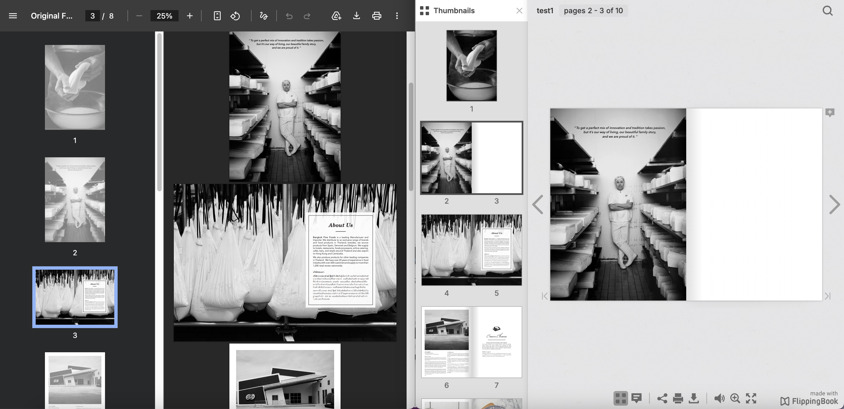
If your PDF mixes regular pages and spreads, FlippingBook may insert a blank page so the spread stays together when readers flip through the publication.
In this example, a blank page is added before page 3 so the spread appears correctly on pages 4-5.
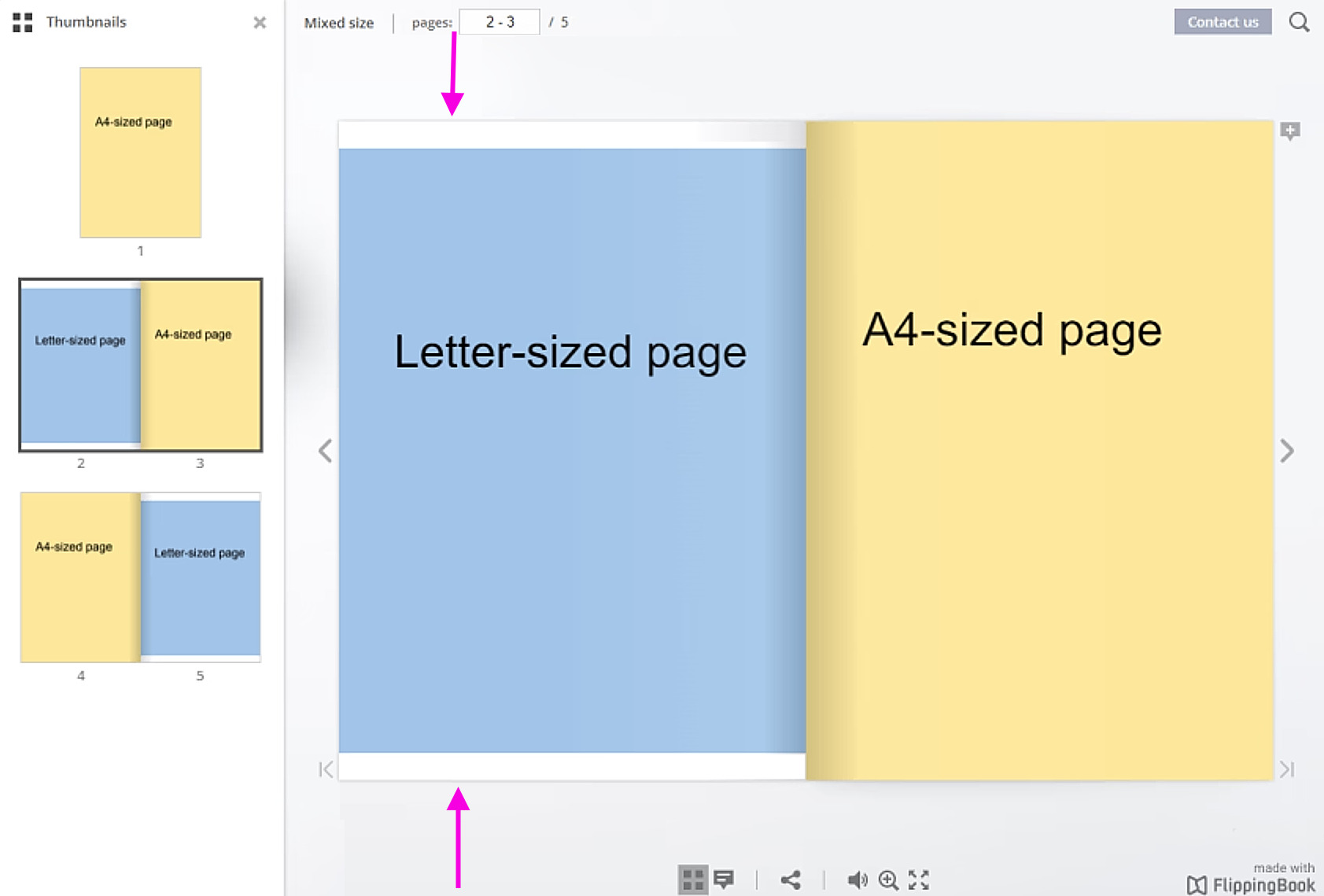
White borders on pages
If some pages have a different aspect ratio than the first page, FlippingBook resizes them while preserving their proportions. White borders are added where necessary so every page has the same dimensions.
How to avoid blank pages and white borders
Make sure your PDF is prepared with a consistent page layout before uploading it to FlippingBook:
- Use the same page size and aspect ratio for all pages in the PDF.
- Don't mix regular single pages with two-page spreads. If your publication contains spreads, prepare all pages using the same layout.
- If you need to use spreads, make sure they are created consistently throughout the PDF rather than mixing different page formats.
- If you're not sure how to prepare your PDF, ask your designer or the person who created the PDF to check the page sizes and layout before exporting it.
If you already have the PDF and don't have the source files, your designer may need to adjust the original document and export a new PDF with consistent page dimensions.


